
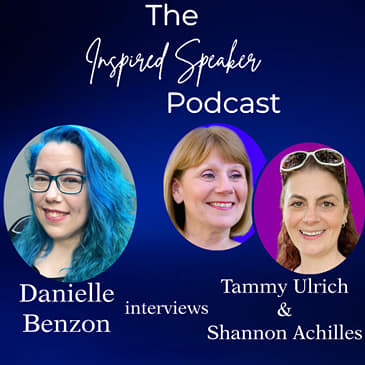
Danielle sits down with mother-daughter duo Tammy and Shannon, co-hosts of The Guiding Parent Podcast, to explore a more conscious, connected approach to parenting.
They discuss breaking inherited patterns, supporting emotional regulation, repairing after mistakes, and guiding children toward becoming fully themselves. Tammy brings decades of experience as a Montessori educator, while Shannon shares what it was like to be raised with these principles and now use them with her own child.
Highlights:
Tammy and Shannon explain the Guiding Parent mindset: focusing less on controlling behaviour in the moment and more on supporting a child’s long-term development, emotional regulation, and sense of self.
- A more conscious approach to parenting
- How our own childhood shapes the way we parent
- Why repair matters more than perfection
- The positive impact of healthy parenting across generations
- Creating a village for parents
About Tammy & Shannon:
In addition to being Mom to four kids in a blended family and a “Gammy,” Tammy Ulrich, MA has always been passionate about making a difference for children and families. For more than 40 years, it has been her life's work—as founder and administrator of a Montessori preschool for 24 years, a college instructor in Child & Family Studies, and now through The Guiding Mindset. Tammy helps parents truly see and understand the unique little human before them. Through practical principles and tools, she supports parents as they nurture and guide their child while navigating their parenting journey with greater confidence and ease.
Shannon Achilles is Tammy’s daughter and the original guinea pig for the Guiding Mindset. Shannon’s a working mom with an exciting job as a grant analyst and is a 20+ year military spouse. She is attempting to train for a sprint triathlon, loves reading, and building LEGOs.
Shannon is parenting her own son with the Guiding Mindset framework. She is well versed in the challenges facing parents in our ever-changing world. Shannon is excited to share The Guiding Mindset with other parents and families so we can all add more ease and joy to the adventure that is parenthood.
Connect with Tammy & Shannon:
Website: https://www.theguidingmindset.com
LinkedIn: https://www.linkedin.com/in/tammy-ulrich-43604028/
Instagram: https://www.instagram.com/theguidingmindset
Facebook: https://www.facebook.com/TheGuidingMindset/
YouTube: https://www.youtube.com/@theguidingmindset-tdu
Linktree: https://linktr.ee/TheGuidingMindset
Tammy & Shannon’s gift for you: The PowerYes!
As parents it seems there is always a reason we need to say “No!” But saying “Yes” eliminates the need for kids to push back. It’s hard to argue with yes!
Claim your gift:
https://theguidingmindset.com/power_of_yes__download-501714
Check out Tammy & Shannon’s Podcast The Guiding Parent Podcast:
https://inspiredspeakernetwork.com/podcast/the-guiding-parent-podcast-with-you-on-the-journey
Visit our GIFT VAULT - updated weekly for more gifts from other guests on this podcast and other podcasts in our network.
https://network.inspiredspeakernetwork.com/vault
About the Host:
Danielle Benzon has devoted her life to exploring the expressiveness, agility, and power of the voice-body instrument. Her journey began in classical theatre and took her around the world before she founded the Inspired Speaker Academy. Now she draws on that experience to help speakers, professionals, and business owners to own and embody their message, fall wildly in love with speaking, and transform their nerves so that every word they speak vibrates with purpose, truth, and self-celebration.
Connect with Danielle:
Website: https://www.theinspiredspeakeracademy.com/
LinkedIn: https://www.linkedin.com/in/danielle-benzon
Book A Call: https://book.daniellebenzon.com/
YouTube: https://www.youtube.com/@inspiredspeakeracademy
The Inspired Speaker Podcast is proud to be a founding member of the Inspired Speaker Network, in partnership with AmplifYou (https://amplifyou.com/).
⭐⭐⭐⭐⭐Don’t forget to follow, rate & review. It helps us reach more people who want to use their voice to create positive change in the world, like you.
Check out More Shows from the Network and connect with our podcasting community at https://inspiredspeakernetwork.com/
Thanks for listening!
Thanks so much for listening to our podcast! If you enjoyed this episode and think that others could benefit from listening, please share it using the social media buttons on this page. Do you have some feedback or questions about this episode? Leave a comment!
Subscribe to the podcast
If you would like to get automatic updates of new podcast episodes, you can subscribe to the podcast on our Network, Apple Podcasts, YouTube, or your favorite podcast app.
Leave us an Apple Podcasts review
Ratings and reviews from our listeners are extremely valuable to us and greatly appreciated. All the main search engines reference Apple metrics so ranking higher on Apple Podcasts will expose our show to more awesome listeners like you. If you have a minute, please leave an honest review on Apple Podcasts.
If you're tired of hiding your brilliance behind stage fright,
Speaker:scripts, or playing it safe, then you are in the perfect place.
Speaker:This is the Inspired Speaker Podcast, and I'm your host, Danielle Benzon,
Speaker:professional rebel, voice coach, and your guide to speaking with confidence, charisma, and zero BS.
Speaker:Around here, we don't chase perfection. We choose connection. So grab a hot beverage,
Speaker:warm up those vocal cords, and get ready to fall wildly in love with the sound of your voice.
Speaker:Let's get inspired. Today is a very special day because this is the absolute first time ever
Speaker:I have had two guests on my podcast at the same time. So exciting. So today we have Tammy and
Speaker:Shannon. They are the co-hosts of the Guiding Parent Podcast, which is on the Inspired Speaker
Speaker:Network. They host together, they do their podcast together, so of course they are doing
Speaker:their interview together. I am so stoked to have them here. Thank you so much for being here,
Speaker:Tammy and Shannon. Thank you, Danielle. We're glad to be here. We've got a mom-daughter team,
Speaker:so I'm going to get you each to introduce yourselves a little bit and tell us
Speaker:about why on earth you decided to do this crazy thing that was start a podcast with me and five
Speaker:other people to start the network because it was very intense. I think it was very fun.
Speaker:Now you're running the podcast and it's going really well. I'm really enjoying the episodes.
Speaker:But what made you say yes? And also just tell us a little bit about you and where you are.
Speaker:So Tammy, I'm going to ask you first. What made you say yes to the network?
Speaker:Oh my gosh, I don't know why I said yes.
Speaker:I don't know. Looking back, I'm not sure.
Speaker:I know. You know, we had talked about doing a podcast for quite a while and it just
Speaker:hadn't seemed like the right time yet. And then you brought it up and it was like, well,
Speaker:and for some reason it just seemed like, OK, let's do this. And so we jumped in, ready or not,
Speaker:more not, and learned as we went. And it was a whirlwind. It was a crazy whirlwind because we
Speaker:had to put it all together really, really quickly. And it turned out great because,
Speaker:well, you, number one, were so much support and really helped hold our hands and make it all OK.
Speaker:But also our network, our group of people are wonderful. And so just having that group that
Speaker:we can, everybody just kind of supports each other and is there for each other. So it just
Speaker:helps. You know, you feel like you're not in it by yourself. You're not in it alone. And you've
Speaker:got these other people that are just starting out, too. And so it's ended up being really great.
Speaker:And I'm so glad we we jumped in ready or not. But and it's it's just come along.
Speaker:Yeah. Yeah. We you really I really wasn't sure. I thought you were going to say no.
Speaker:And then you're like, yeah, let's do this. OK.
Speaker:So it really it really was. Well, I'm so glad you did it. Your podcast is amazing now.
Speaker:So, Shannon, were you just kind of dragged along by your coattails? How did you get involved in
Speaker:this? I mean, like my mom said, like we've kind of like floated this idea of doing it someday
Speaker:in the future, eventually kind of thing. And, you know, it's kind of been in part of that you're
Speaker:talking about, like if I would co-host with her or something like that. And so then when she
Speaker:mentioned it, it just kind of seemed perfect. And definitely it was sort of like, OK, let's,
Speaker:you know, jump in together and figure this out as we go. But, you know, for me, like I've had
Speaker:the perks of being raised within this, you know, kind of mindset around how to parent and then now
Speaker:parent my own child that way. And so it seems sort of perfect to have like my mom as a parenting
Speaker:expert and me as someone who parents from that and, you know, has a kid and, you know, is in
Speaker:the trenches, so to say. And so it just seemed like the kind of perfect scenario for creating
Speaker:something that would hopefully really support other families. And it is really fun. We get to
Speaker:do it together. Yeah. So you guys are obviously very close. I mean, I don't think every family
Speaker:has that luxury of being or not luxury is the wrong word, privilege of being close with, you
Speaker:know, parents and kids being close. But you two, I think you guys talk most weeks anyway. Is that
Speaker:true? We talk most days anyway. Really? Most days? OK, wow. OK. Like if I go three days without
Speaker:talking to my mom, I'm like, oh, God, is one of us like something wrong? Oh, wow. OK. OK, cool.
Speaker:So this really is just an extension of your lives. It's just like letting the audience in on what's
Speaker:going on already. Absolutely. I mean, that's one of the things we've joked about is that we've
Speaker:taken these conversations that we would have had on the phone anyway. You know, me calling my mom
Speaker:and being like, oh, my kiddo's doing X, Y, Z. You know, what do I do? How? You know, and just turn it
Speaker:into a podcast of things that we would have been talking about anyway. So it's kind of fun. Nine
Speaker:times out of ten, she knows exactly. She just needs to talk it through. Right. I have a really, really
Speaker:excellent sounding board, so I'm lucky. But that's what good parenting is, isn't it? It's
Speaker:about making that space for them to to figure it out for themselves. So you're still doing it, Tammy.
Speaker:So The Guiding Parent is about this guiding mindset. And you have a book coming out,
Speaker:Tammy, on that. And this is this is a philosophy that you've been living and breathing for an
Speaker:I don't want to say an extremely long time because, you know, but for much of your life.
Speaker:So can you tell us a bit about, you know, why?
Speaker:What is it? What is it? And why is it important? What is it? What are you what are you talking
Speaker:about? You're not just talking about parenting in general. You're talking about a specific type
Speaker:of parenting on your podcast. Yes, absolutely. It's, you know, we most of us were not raised for
Speaker:in a manner of what we need for for the world that we're that we're in and children are going into.
Speaker:And a lot of our parenting and the way we raise kids in general are the way society looks at
Speaker:children isn't necessarily optimal for their full development, for their ability to really
Speaker:be who they are and reach their potential and all that. And so that's really what the
Speaker:guiding mindset is. It's a change in how we look at and think about children and and how we want to
Speaker:help nurture and guide them so that they really can, you know, reach their potential. So it's
Speaker:just kind of a changing, changing the way we think and having a different mindset in how we're
Speaker:nurturing, nurturing kids. And there are seven principles that go along with that, with the idea
Speaker:that when we when we put these principles in place, we have the guiding mindset, we put these
Speaker:principles in place, then regardless of whatever, you know, our kids throw at us, whatever crazy
Speaker:thing is going on with them, we'll be able to figure out what's the right thing to do, not just
Speaker:like in this moment. How am I going to get them to stop, you know, screaming right now, but in a way
Speaker:that also supports their their their full development and and, you know, their whole
Speaker:selves, not just stop screaming now. But, you know, how do I how do I guide them so that they have
Speaker:better tools to deal with why they're screaming, you know, to have better have better ways to, you
Speaker:know, they're learning how to regulate those emotions. Yeah, so it's just it's the ideas for
Speaker:there to be for parents to be able to find their find the answers to those difficult moments.
Speaker:I mean, I think this is so important. I'm not a parent myself, but I am. I kind of feel like
Speaker:parenting is any sort of leadership, you know, like you parent yourself, you parent your employees,
Speaker:you parent your your, you know, you and your spouse parent each other in some ways. Like,
Speaker:I feel like these are these are principles that are extremely important for our young people,
Speaker:but also their their human communication skills in general, like these are all very important.
Speaker:And I know Shannon, so Shannon, you grew up, you're, you know, Tammy already had these
Speaker:principles, or at least mostly had these principles while you were being raised.
Speaker:Sorry, they were in process. She was the guinea pig, right? Yeah.
Speaker:So were you aware of it? Like, I know you're aware of it now, like as a parent, you're like,
Speaker:very aware of what your mom did with you and what you're doing with your kiddo.
Speaker:But as a kid, how aware were you of the way you were being parented?
Speaker:I think I was conscious of it more in like,
Speaker:there were certain things that I knew happened in other people's houses that
Speaker:were probably not great that weren't happening in mine kind of thing. And, you know, having friends,
Speaker:we talked about this in one of our podcasts recently, like, in dealing with, you know,
Speaker:telling kids know that I had friends who like would hear be told just no, no explanation,
Speaker:no, you know, anything was just absolutely not my way or the highway kind of parenting.
Speaker:Whereas, you know, in our house, if there was something we couldn't do, for whatever reason,
Speaker:we got the reason. And so there was just so much more communication around different decisions,
Speaker:like we felt like we were part of decision making processes most of the time. And so,
Speaker:you know, I'm the oldest of there's four kids in our family, I'm the oldest. And so I think I got
Speaker:to watch it a little bit with myself, but then also be conscious of it with, like, there's a
Speaker:five and a half year gap between me and the next brother. And then the little kids who are obviously
Speaker:now all in their 30s are like a year apart. And so, yeah, I think I mean, I don't know that I
Speaker:would have like at the time been like, Oh, well, you know, I'm being parented in this optimal way
Speaker:and you know, super serious about it. But I definitely did pick up on you know, there were
Speaker:things in our house that worked better, or, you know, worked for our family in a way that I felt
Speaker:was really positive. And do you feel like it's affected you into adulthood? Absolutely. I mean,
Speaker:that's one of the things that like I've talked about with my son is that, you know, there are so
Speaker:many different aspects of privilege that he has. And one of them is having a parent who gets to
Speaker:parent from almost muscle memory. Like I've talked about this before, like so many parents now,
Speaker:you know, who have kids have to override their defaults, because you get your defaults from how
Speaker:you were parented. And so my defaults are great. Because of how I was parented. I don't have to
Speaker:fight against what my initial reaction is, because, you know, nine times out of 10, my initial
Speaker:thought of how to handle a situation is what I would want to do if I had had an hour to think
Speaker:about it. And that is 100% a result of being raised in a way that was supportive, and you know,
Speaker:mindful and thoughtful and all of these things. And like, it's absolutely not to say that everything
Speaker:was perfect. But at the end of the day, those default that I think I have, you know, kind of
Speaker:internalize, or make my life infinitely easier, I think. I hadn't even thought of that. That's
Speaker:amazing. So the the kind of cumulative effect over the generations is going to be amazing.
Speaker:It's going to be so yeah, and like my mom and I have talked about that before, like, what's the
Speaker:opposite of intergenerational trauma? Like, you're walking back some of these things where rather than
Speaker:defaulting to, you know, what happened to you as a child that wasn't great, you have the opposite.
Speaker:And, you know, I get that. And then what does my child get to then when he's a parent and how
Speaker:these things can cycle in a really beautiful, positive way, too.
Speaker:Oh, I love that so much. And I mean, sounds like you did an amazing job, Tammy. So well done.
Speaker:What is it like watching your your adult daughter parent? Like, what's that like, Tammy?
Speaker:Oh, I love it. I love it. She's, well, she she has taken what her parenting and then added so
Speaker:much. She, you know, she she's a way she's a much better parent than I was. Because, you know,
Speaker:she had that. And then, you know, she's so conscientious. And, you know, she definitely
Speaker:parents with intent. She definitely wants to make sure she's making choices that support,
Speaker:you know, support her son and becoming, you know, becoming who he is. And so, you know,
Speaker:that's just so second nature for her. And it's it's fun to it's fun to watch. And I get to be
Speaker:so proud. I mean, that's so beautiful. And I'm just I'm so I'm so glad you guys are part of
Speaker:the network because it it brings so much. I think parenting is one of those things that touches
Speaker:everybody, everywhere. You know, everyone has parents. Not everyone has children,
Speaker:but everyone has parents. And we've all been parented. And we all have opinions about
Speaker:about how that went, and how it should go. And, you know, we all have our own relationship with
Speaker:ourselves. And, yeah, there's just, there's so much impact that these conversations can have.
Speaker:So I'm really glad that you are having these conversations in public, so that other people
Speaker:can listen to you, and share and ask questions and, and relate to what you're going through.
Speaker:Tammy, what do you think the biggest challenge is for parents who, who are their parents now,
Speaker:and they haven't had good examples for themselves? Like, so, unlike Shannon, they've,
Speaker:they've had parents who maybe were very reactive or very, very neglectful or just absent. What do
Speaker:you what do you think their biggest challenge is trying to do the right thing, but not having a
Speaker:default template to fall back on? Well, it really, it really takes awareness,
Speaker:because unless we consciously make different choices, we're going to parent the way we were
Speaker:parented, because that's the model, it's somewhat ingrained in us, because, you know, as children,
Speaker:we were just absorbing all of this. And so we're most likely to parent, you know, to react and
Speaker:respond in ways that that our own parents did. So the I think the biggest thing is just becoming
Speaker:conscious, having that awareness and starting and starting to see our very first principle is it
Speaker:starts with you. And so that's, that's what that's it is that, you know, you have to look at yourself
Speaker:and go, okay, how, you know, how was I parented? And, you know, what's the good, the bad and the
Speaker:ugly? What do I you know, what do I want to keep? What do I what do I want to change? And then,
Speaker:you know, have have that awareness so that when those moments happen, you can go, oh, okay,
Speaker:and they're going to happen, you know, no matter how, no matter how well you were parented, or what
Speaker:a great parent you are, you're going to have those moments. So yeah, being able to then go, oh, okay,
Speaker:I didn't like how that went. And then, you know, we can always we can always look, look repair one
Speaker:of our one of our podcasts is parent or kids don't need perfect parents. And so you know,
Speaker:it's it's an ongoing process for all of us to just continually keep that awareness and just
Speaker:stay as conscious as we can so that we can, you know, we can choose and, and know that depending
Speaker:upon the moment, how stressed we are, how tired we are, what else going on, you know, we'll,
Speaker:we'll show up in varying degrees of what we have what we ultimately want to want to be.
Speaker:Well, I think we all have something that we want to aspire to. And I mean, even again,
Speaker:I'm not a parent, but I think all parents have something like an ideal way they want to parent
Speaker:and we all fall short of our aspirations all the time as human beings. I think, for me, I think,
Speaker:and I'm curious to see what you think about this. I think that the biggest difference between an
Speaker:effective parent and perhaps less healthy parent is not how often they fail, but how they recover.
Speaker:Absolutely. Absolutely. I really believe it's all about repair. That when we make a mistake,
Speaker:you know, old school would be like parent is always right. So parents can't make mistakes
Speaker:because, you know, but when kids get to see that, yeah, we're human and we make mistakes too,
Speaker:then they also learn how to repair from, you know, when they fall short, when they make mistakes. So,
Speaker:you know, when we do screw up with our kids coming back and going, I didn't like that. I'm sorry.
Speaker:We can apologize to our children and start over, you know, say, let's have a do-over
Speaker:and start again. But, you know, coming back and repairing that connection, because when we have
Speaker:those moments, we end up with a disconnect. And so just continually coming back and reinforcing
Speaker:our connection is, you know, one of the biggest pieces is keeping that connection strong.
Speaker:And finding healthy ways to take accountability. I mean, I think that's one of the things that
Speaker:adults in the world are lacking the most is because we don't know how because we haven't
Speaker:had it modeled. So I think, you know, no matter how fallible or imperfect you are as a parent,
Speaker:as long as you're coming back and showing up and taking accountability and doing your best
Speaker:and communicating. Yeah, I think that sounds like the biggest game changer.
Speaker:Um, so but you guys, you're not even living in the same city right now, are you? Janet,
Speaker:you're somewhere. Janet, you're somewhere else. Well, I mean, everyone's somewhere else,
Speaker:because we're on the internet. But yeah. My husband is in the Air Force. And so we've
Speaker:gotten to live all over the place at this point. But currently we are stationed in Hawaii,
Speaker:which is delightful. What's that like for your kiddo?
Speaker:I'm amazing. Oh, my gosh. He was like, I now it's been three and a half years since we've been here.
Speaker:And so like now I think of him as this, you know, little beach bum. And, you know, he's a sunshine
Speaker:baby. Forgetting that the first time he came to Hawaii, which was, I don't know, about a year
Speaker:before we actually moved here. He hated the beach. He hated the sand. He wanted nothing to do with
Speaker:any of it. And grumbled the entire vacation. And he would happily go to the pool, but wanted
Speaker:nothing to do with the ocean. And now, you know, Friday night, Mom, can you check the surf report?
Speaker:Because I want to go boogie boarding tomorrow. And maybe we can go Saturday and Sunday.
Speaker:And, you know, and we're really lucky. Also, you know, we live on a military installation,
Speaker:which makes it a little bit easier to keep him contained. So he gets to just go run around our
Speaker:neighborhood. He has a lot of freedom. It's really nice for him. You know, in this lovely age of
Speaker:technology, he's got a smartwatch so I can stalk him and know where he is. But other than that,
Speaker:I get to, you know, and he's got boundaries, obviously, of where in our neighborhood he's
Speaker:allowed to go. But yeah, he gets a lot of freedom, which is really nice. And that is allowing him to
Speaker:just kind of, you know, we don't have to worry too much about the weather because it's kind of
Speaker:nice.
Speaker:Which is not the same where Tammy is right now.
Speaker:No. I'm in Oregon. So we're just coming into the rainy season is about to start.
Speaker:Is this why you talk so much? Because you're you're living in opposite sides of the world?
Speaker:No, did you always?
Speaker:Always.
Speaker:Wow. I think it's amazing. Life goals, for sure. It's beautiful. You have, you two, and I listen to
Speaker:obviously, I listen to all of your podcasts. You two have such a beautiful relationship. It really
Speaker:shows you have so much fun. You know each other so well. You're very close. You've got such a
Speaker:wonderful dynamic. Your conversations are so fun to listen to. You've got all these little stories
Speaker:that are not like, not embarrassing, like poking fun at each other, but just kind of these fun,
Speaker:kind of silly little stories of, you know, Shannon when she's growing up and then obviously of your
Speaker:kiddo as well. It is like being on a fly on the wall listening to your conversations. It really
Speaker:is just like, oh, they're having this one. It is kind of like listening in on your phone call.
Speaker:So it's really beautiful. So before we talk a bit more about the future of the podcast,
Speaker:I'd love to just hear a bit more about what you do. I don't know, Shannon, if you want to
Speaker:talk about your life outside of the podcast or if you want to stay on the guiding mindset
Speaker:kind of arena. But for both of you, just a little bit more about like your background
Speaker:and where you're coming from and how you move in the world. Sure, I can start. So outside of being,
Speaker:you know, a backup, not backup, but co-host of a podcast, I'm really lucky to work on a
Speaker:research grant. So I work on the administrative side, not the scientific side. But we are
Speaker:studying autoimmune diseases and different interventions to try and create tolerance
Speaker:within the immune system, allowing for people to have immune diseases or, you know, things like
Speaker:allergies or have undergone transplants to exist without like daily intervention. So moving
Speaker:it away from people having to take medications consistently to like a single intervention that
Speaker:then like is, you know, life changing and allows them to, you know, either be in remission or,
Speaker:you know, not be an active disease. And so I have been really lucky to work on this grant
Speaker:for 13 years now. And so it's super fun to be doing something like I'm not a scientist. I'm
Speaker:not going to solve type one diabetes, but I get to work with people who can and hopefully will
Speaker:someday, you know. And so it's super fun to, you know, kind of be on the edge of this cutting edge
Speaker:science and getting to watch that happen in real time. And then other than that, mom, which takes
Speaker:up quite a bit of my time. I can imagine. You know, we're recording this on my kiddo's birthday,
Speaker:which is kind of fun. And so, yeah, that's definitely a huge portion of my life is,
Speaker:you know, helping him become the kind of little human we want to have in the world.
Speaker:And then when, you know, I do have free time, I love to read. I am attempting to become a
Speaker:sporty spice, as I like to jokingly call it. I have never been a sporty spice. And so, you know,
Speaker:obviously, now that I am fully grown and my joints want nothing to do with it, I have decided
Speaker:to take up running. And yeah. So my goal, we'll see if I actually get there, is to do the Honolulu
Speaker:Sprint Triathlon. But that's been my goal the last two years now. And so we still haven't quite
Speaker:hit it, but we're going to keep trying. You'll get there. I believe in you.
Speaker:I've learned, I've learned things about you today, Shannon.
Speaker:Awesome. And also, yeah, and you're the co-host of this podcast now.
Speaker:Yeah.
Speaker:Really fun. And an extension of your mom-ness, I guess, because it is.
Speaker:Yeah. And I was really lucky, like, you know, not only did I grow up with my mom parenting me,
Speaker:but also, you know, I grew up in her preschool. She started it when I was two and a half. And so,
Speaker:you know, promptly had to kick me out because, you know, I was a little bit of a situation there for
Speaker:a minute. Maybe a two and a half year old.
Speaker:Her favorite thing is to say she got kicked out of her mother's preschool.
Speaker:Yeah. Quite proud of myself for that one. But, you know, I went to school there until I, you know,
Speaker:finished kindergarten. And then when I started elementary school, she started a summer elementary
Speaker:program. And, you know, while I was even in elementary school, I was, you know, a helper
Speaker:around the school. And then as, you know, I got older, I more and more, you know, helped out and,
Speaker:you know, was kind of like a pretend substitute teacher until I was like 16, 17 years old and
Speaker:could actually be a substitute teacher and really, you know, help. And so I got really
Speaker:lucky in just getting to absorb child development and how little people are kind of by osmosis,
Speaker:just growing up in it. And so that, I think, is another huge privilege that I've had in terms of,
Speaker:you know, how that's influenced how I parent and how I, you know, am with little people.
Speaker:I got to just kind of, you know, I think at one point or another, all of me and my siblings have
Speaker:worked there. And so we all kind of got to soak up being around kids and, you know, what is kind of
Speaker:the best ways to handle different scenarios with little people. Family is the family business
Speaker:kind of thing. Yeah, I love it so much. And Tammy, so tell us about the school and tell us
Speaker:about everything else. Well, I had a Montessori preschool for 24 years. And like Shannon said,
Speaker:I started it when she was two and a half. And it was supposed to be so lovely because I was going
Speaker:to have my little girl there. And, you know, it was going to be so nice. I could work, but still
Speaker:have her near. And yeah, she wasn't going for having to share mom with these other kids. And
Speaker:was terrible. She was terrible. She would get in the middle of circle time and scream. She'd
Speaker:climb up on shelves and she was really... That was a lot. I love it. So she ended up going to
Speaker:another Montessori school where a friend of mine worked. And so I would drive her quickly down to,
Speaker:you know, to this before I opened my school and drop her off with my friend. And because
Speaker:that program didn't open quite yet. And so my friend would take her and then I'd rush back
Speaker:and open my school. And then at lunchtime, I'd go get her and bring her back. But luckily,
Speaker:that was only for one year. And then my friend actually came and taught. We opened a second
Speaker:classroom and came in and taught at my school and Shannon was in her room. And so then it was all,
Speaker:we were all back to normal. She just was not, it was just too much trying to share mom and have mom
Speaker:be a teacher and not just solely her mama. I can imagine. Yeah. And it was a real challenge
Speaker:because, you know, here the whole idea was I was going to be with my little girl and now I started
Speaker:this program and I'm, and this is not going the way it was planned at all. But it all did finally.
Speaker:So I had, we had the school for, for 24 years. And like Shannon said, all the kids worked at it
Speaker:at one point or another in some way. I've said before, I think it's actually in one of the
Speaker:podcasts to the best ever memory for me was the summer that, that Shannon was actually my assistant
Speaker:for the summer. We did the summer program together and she was a true assistant at that point. She
Speaker:was old enough and she really was like the best assistant I've ever had. And her little brother
Speaker:wasn't quite old enough to be true staff, but he also was kind of, you know, at that point in the
Speaker:summer elementary that he was done. And so he was our helper. And so I had this summer of working
Speaker:with the kids with both my kids and it was, it was very cool. So that was, yeah. And when I,
Speaker:when I sold, sold child's view I was able to find a person who had, you know, similar
Speaker:views and, and, you know, all of the like education for peace is a really big thing for me. And nature
Speaker:is a really big thing. And those were really important to her too. And so, you know, it,
Speaker:it continues on today. And so that's, that's lovely. And I then moved into working with adults.
Speaker:So I, I teach classes at a community college and I'm doing workshops. I've done workshops for
Speaker:parents and, and educators on various subjects and writing the book, The Guiding Parent. And now
Speaker:here we are doing the podcast. Yeah. And the, the book is going to be a wonderful compliment
Speaker:to the podcast when it comes out. I just kind of overview of, of it all. Yeah. And you've got
Speaker:seven principles or seven principles, seven principles. So I'm assuming those are all
Speaker:very well detailed in the book. You're more kind of discussing how the principles are applied in
Speaker:the podcast. Whereas I imagine the book kind of defines things a bit better. The book goes into
Speaker:more about, you know, the whys and the whys of the, of the principles, but also a little, you
Speaker:know, how to, how to put them into use. Very cool. Very cool. I love this. I love what you're doing.
Speaker:I love the, we're so aligned in like the values and how you are moving through the world and what
Speaker:you're building and, and how you want to help people and affect people. It's, it's so important
Speaker:to me to have voices like yours amplified on the network. It's, it's just, yeah, it's a really,
Speaker:really big deal. So where are we, where are we going with The Guiding Parent podcast? What is
Speaker:the dream? What if, if, if you could have any future that you could possibly imagine, what
Speaker:would, what would happen with the podcast? What would it look like in 10, 15 years?
Speaker:Be all end all. Parents would flock to The Guiding, The Guiding Parent podcast to hear just
Speaker:that it would transform how, you know, everybody parents and makes life easier for people as
Speaker:parents. But really what we I think both Shannon and I, you know, what we really hope for is to
Speaker:create like a village that we can be part of, that we can create like a village that, that
Speaker:supports parents. You know, we, we think of it as, as the parenting journey and that we can be there
Speaker:to support, you know, support parents on their parenting journeys. And so that they have,
Speaker:especially because today we're so spread out, you know, so many, most, most families don't
Speaker:really have a lot of support. You know, their own families may be, you know, far away or, or maybe
Speaker:they don't want their, you know, their family to be directly involved. So, you know, we need
Speaker:support. We're not meant to do this, you know, families aren't meant to just do it all alone.
Speaker:So, you know, hopefully we can, we can be a village that, that supports people along the way.
Speaker:Yeah. Yeah. Our little tagline is with you on the journey. So like my mom said, you know,
Speaker:we really want to create, you know, community that does lift up, you know, parents and families.
Speaker:And, you know, hopefully the results of that is that then we have a generation that grows into
Speaker:adults that are kind and, you know, conscious and, you know, ultimately then they can parent their
Speaker:kids that way. And, you know, we can, you know, all live in sunshine and rainbows, but realistically,
Speaker:I mean, I do think that, you know, we've seen in the world what a generation of dysregulated people
Speaker:does and it's not great. And so, you know, if we can add, you know, one by one, child by child,
Speaker:you know, a group of people who, who can, you know, handle the struggles of the world and do
Speaker:it in a way that, you know, makes everything just a little bit better for those around them. I think
Speaker:that, you know, that sends us on a better trajectory. I can't even imagine a few generations down, but
Speaker:even just one or two, trying to imagine a world where emotional regulated humans are the norm
Speaker:and people are emotionally mature and can talk through their problems and can feel emotions
Speaker:without inflicting them on other people and can, you know, respond to change and stress in a way
Speaker:that is compassionate to themselves and to other people. I can't, I can't even imagine what that
Speaker:world would look like. There's a quote that I love. It's, it was between, well, there's
Speaker:different debates on where it came from, but between Gandhi, Mahatma Gandhi and Maria Montessori and
Speaker:Gandhi says, it's true. You've truly stated that if we're to, to create real change in the world,
Speaker:we have to begin with the children. And so it's all kind of part of my, you know, I said, part of,
Speaker:part of what I really care about is education for peace. And this, it really is the foundation for
Speaker:that. Yeah. If children grow up, you know, regulated and meeting their potential and feeling
Speaker:fulfilled and, and cared about, they're going to be completely different. We'll have a completely
Speaker:different world. And, you know, that sounds all like la la la pie in the sky, but, you know,
Speaker:that that's the possibility with children really having what they need. And it's kind of the flip
Speaker:side of that too, is like, one of the things that I love about, you know, guiding parent principles
Speaker:and how I, you know, kind of involve them in our family life and in my own parenting is it makes me
Speaker:so much more confident as a parent. Like I feel empowered and how that impacts my own like
Speaker:self and like stress levels and all of that. And so, you know, if we have kids that are better
Speaker:regulated, we also then, you know, the flip side of that is we have parents that are better regulated
Speaker:and feel more confident going into parenting and what a difference that makes just for, you know,
Speaker:parents day-to-day life to feel confident and, you know, to have a village and to have support
Speaker:structures that, you know, lift them up too. So I think, you know, we can support our kids and we
Speaker:can support families and parents and make it better for everybody. I think when parents really
Speaker:have a better understanding of why is my kid acting this way, you know, when they realize,
Speaker:oh, he's not really trying to just annoy the crap out of me. He's, you know, he's having
Speaker:difficulty himself. When we realize that it's development that it or lack thereof, you know,
Speaker:and kids just have big emotions and we start to understand what's really going on with them.
Speaker:It's much easier not to get quite so fired up. I mean, they're still for us to be very frustrating,
Speaker:but, you know, we're going to handle it better and make sense of it better and have,
Speaker:like Shannon said, have a lot more confidence when we understand what's going on.
Speaker:Yeah, compassion and empathy over control. And I think this is why I think your podcast is so great,
Speaker:even for people who aren't even planning on having kids. I mean, obviously, for people who are
Speaker:planning or have kids, it's amazing. But even for people like me who I'm not planning on having
Speaker:children at all, there are a lot of adults out there who are still children. And so, you know,
Speaker:learning that compassion and the empathy and instead of trying to control other people,
Speaker:trying to understand them and figuring out where they're from, and ourselves as well. You know,
Speaker:I do a lot of self-parenting too. And it's just, yeah, I do think, I mean, it sounds so hyperbolic
Speaker:and I feel kind of cringy saying it, but I think podcasts like this could change the world, you
Speaker:know, and I do. I want to live in a world where these principles are like, well, duh, not, oh,
Speaker:wow, this is a new way of doing things. I never thought of it like that. It was like, yes,
Speaker:of course. Well, of course, that's the world I want to live in. So thank you both for
Speaker:contributing to making that world a real place. Before we wrap up, I would love to hear,
Speaker:is there any, and I'm putting you on the spot because we didn't prep this at all.
Speaker:Do you have any like favorite little stories or something? Favorite little family story,
Speaker:like a silly, fun, anything you'd like to share? I just, I love hearing your stories.
Speaker:I know Shannon shared one that wasn't on the podcast backstage about something about going
Speaker:through a window. That one is fun. So when I was very small, I had to have been like two and a
Speaker:half, maybe three months. Does that sound about right? Thankfully we had a first floor, you know,
Speaker:my bedroom window went to the backyard. Oh my gosh, if it had been a two story.
Speaker:Right. But underneath my window was my sandbox. And so one time I just decided to subvert, you
Speaker:know, having to go all the way through the house and out the door and just climbed out my window
Speaker:and popped myself right in my sandbox. And as far as I know, you didn't know where I was for a minute
Speaker:or did you know that I climbed out the window?
Speaker:That's probably true. I just remember you climbing out the window.
Speaker:But you didn't see her climbing out the window. You just obviously figured it out at some point
Speaker:that she had. Well, there were shelves underneath the window that she could climb up on.
Speaker:Actually, the memory in my head is seeing you actually plopping out, you know,
Speaker:kind of just plopping, you know, as it came to happen, went out. But yeah. Sometimes as kids,
Speaker:we think we're being stealthy and our parents actually just watching us going, I wonder what's
Speaker:going to happen. That is one of my favorite things that I realized as a parent is how frequently,
Speaker:like as a kid, I thought I got away with something. And really it was like, oh, that is
Speaker:not worth having seen. I will just pretend that I have no clue that happened because otherwise I
Speaker:have to do something about it. And I do not. So there's always those little things that like,
Speaker:you know, they're not going to, yeah, they're not going to make or break the world. And so we'll
Speaker:let the little people feel like they, they got one over.
Speaker:Shannon was the cutest little thing and she, she could, she definitely had her mischievous feisty,
Speaker:feisty moments. Shall we, I can tell the story of when, when I did have to send her
Speaker:to the other school. And I think I know what story this is.
Speaker:That I was told about this, you know, my, my, well, you weren't really disruptive, but,
Speaker:you know, the antics of my, my child that in Montessori, there is a hand washing activity.
Speaker:And the idea is, you know, the precision of it and, and, you know, your hands in water and all
Speaker:of this, but there's all these steps to it. The child gets to go, you know, they have a pretty
Speaker:little basin and they go and get water in a, in a pitcher and pour it in. And, you know, then they
Speaker:get, they have special soap and when they're finished their special, special hand cream that
Speaker:they get to put on and, you know, then they, you know, they clean it all up. Anyway, it's this
Speaker:whole process. It's a very special thing to get to do. It's almost meditative in how like exact
Speaker:each step is. Very like supposed to be calm and yeah. So Shannon gets it all set up. You know,
Speaker:she has, she has her bowl. She's gone and gotten the water she's poured it in. And the story that
Speaker:I hear is that Shannon then stands with her hands just above the basin, looking at her teacher.
Speaker:And as soon as her teacher looked at her, Shannon went splash water everywhere,
Speaker:just to see what would happen. I was a delight. You were a delight. I mean, that just sounds like
Speaker:I have so many happy memories of running around in the mud and the rain as a kid, like barefoot
Speaker:going splishy splashy, you know, I feel like that's immediately what comes to mind for me.
Speaker:Just like, yeah, it's way more fun to go make a mess. Yes. It's just water. Not hurting anybody.
Speaker:And I think Shannon was somewhat objecting to things having to be just so. Yeah. You know,
Speaker:she wanted to fully immerse in it, not just be, you know, prim and proper.
Speaker:It's a little too stoic of a situation for me. Yeah, we had to like,
Speaker:had a little whimsy or something to mix things up a little bit.
Speaker:Yeah, I was not one to color in the lines myself. So I'm so with you.
Speaker:Alright, so we are coming to a close. This has been a delight, of course, to chat with you both
Speaker:and to get to know you better. I am loving your podcast, The Guiding Mindset. No, The Guiding
Speaker:Parent podcast comes out the first and third Tuesday of every month, because these are busy
Speaker:parents. So, you know, we've only got so much time. But their episodes are amazing. They put a
Speaker:lot of thought into them. And they've always got such lovely stories. And it's very relatable,
Speaker:very relatable advice and very relatable situations that come up. Do either of you,
Speaker:let's have a final word from from both of you. Just a last wish for our audience before we send
Speaker:you on your way. Shannon, do you want to go first? Oh, no. Tammy, you go first.
Speaker:I was gonna say we, you know, love to have have more parents come and listen. But we'd also love
Speaker:to hear what parents want to know more about. So that we, you know, we're, we'd love to explore
Speaker:different topics that our listeners are, are wanting to hear, hear about. So, you know, we
Speaker:have our own own things that we talk about, but we'd love to explore other, you know, things that
Speaker:our listeners are interested in as well. And your contact information, there's a, there's an email in
Speaker:the show notes to submit questions. So please do that. And because, I mean, what a wonderful way to
Speaker:to feel supported is to ask about something that you're struggling with and, and get two very good
Speaker:parents perspectives on. So, yeah, thanks, Tammy. And Shannon, any last last words?
Speaker:I think I'll just reiterate, you know, with you on the journey is our little tagline and how much,
Speaker:you know, we really want that to be true. We really want to become part of, you know, somebody's
Speaker:families, you know, day to day, like, you know, the little, little thoughts in the back of your head
Speaker:that perk up when you're in a scenario, if it could be, you know, our voices from time to time,
Speaker:you know, kind of helping guide you and, you know, not just as guiding our kids, but, you know,
Speaker:creating a guiding, guiding parents, so. Parenting with more ease. Yes, more ease and joy.
Speaker:Ease, peace and joy. Yes. I'm so, so glad that you two are out there doing your beautiful,
Speaker:supportive things for parents. Please go check out the Guiding Parent podcast. Join the village,
Speaker:join the network, hang out, have these conversations, and we'll see you both
Speaker:again very soon. Thank you very much. Thanks, Danielle. Thank you.